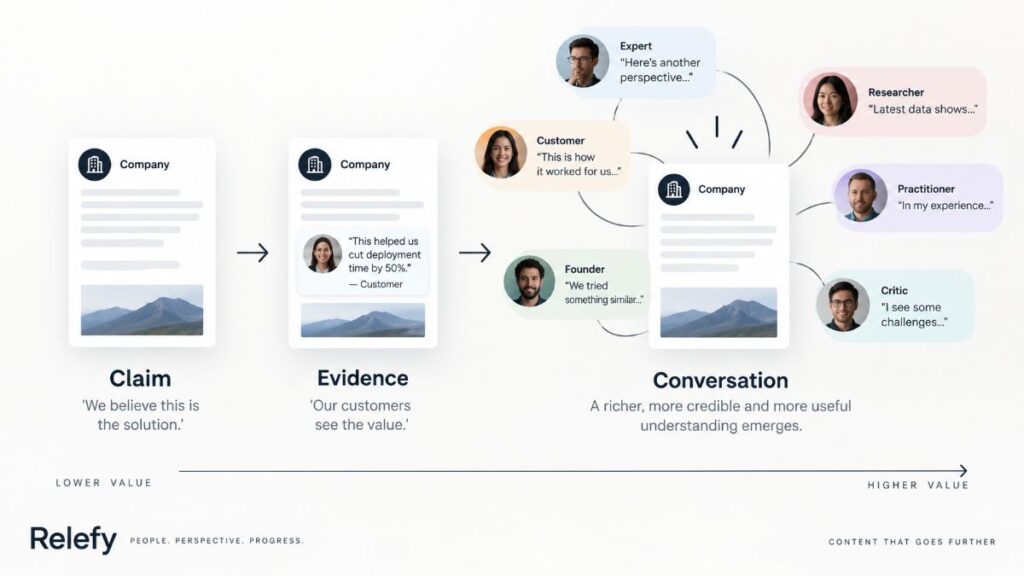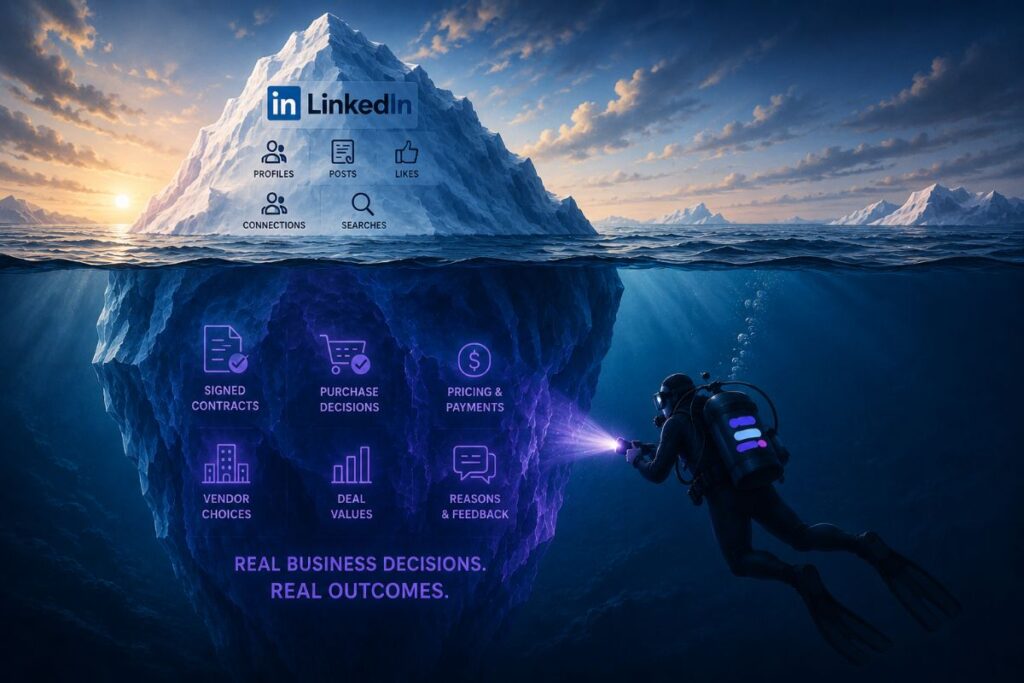
Every argument about AI and content assumes the disease is content itself. Too much of it. Too fake. Too generic. Too identical. That’s a symptom, not the disease. The actual problem is older than AI and much bigger than a LinkedIn feed. The world has never once, in any period anyone alive can remember, suffered from too little to read, watch, or hear. What it suffers from is a permanent shortage of relevance. The right piece of information reaching the right person at the right moment, in a form that actually changes what they do next.
Content is just the version of that shortage everyone can see. The pressure existed before AI did. Founders were already expected to produce two LinkedIn posts a day, a carousel, a reel, a newsletter, and a YouTube script, whether or not they had anything worth saying that day, as the newsletter Zero to Something has pointed out. AI didn’t create that quota. It just made it possible to hit the quota without pausing to check if anything relevant was in it. Pangram Labs, a company that builds AI-text detection tools, scanned more than a million posts across LinkedIn, Medium, Substack, X, and Reddit in 2026 and found that roughly 41% of long-form LinkedIn posts were likely fully AI-generated. That number gets treated as an authenticity crisis. It isn’t one. It’s a relevance crisis wearing an authenticity costume. Nobody scrolling past those posts is asking whether a human wrote them. They’re asking, half-consciously, whether any of it applies to them. Mostly, the answer is no.
None of this makes AI inherently dishonest, either. The mechanism doesn’t manufacture a voice from nothing. It amplifies whatever gets put into it. A system built on someone’s actual conversations, actual customer calls, actual internal debates, produces output that sounds more like that person, not less, because it was never guessing. It was listening. Feed it something honest and specific, and the output is honest and specific. Feed it a one-line prompt and nothing else, and the output is exactly as empty as the input was. Garbage in, garbage out, just faster and better dressed. The question was never AI or no AI. It was always whether the person on the other end had anything real to feed it.
Content just happens to be the form of noise people notice, because it’s the one they scroll through daily. The same failure runs through almost everything else a business does, quietly, without anyone calling it a crisis.
A go-to-market strategy built on the same message sent to every account, regardless of size, sector, or stage, is not a strategy. It’s a broadcast. It fails for the same reason AI slop fails. Nothing in it was selected because it mattered to the specific recipient. A sales conversation that opens with a generic pitch instead of a question shaped by what the prospect actually does has the identical problem in miniature. The salesperson has information, plenty of it, but hasn’t done the work of finding the sliver that matters to the person in front of them. Market research that produces a forty-page report nobody reads has the same problem at a larger scale. Value existed somewhere inside all that data and got buried instead of surfaced. A hiring process that filters by keyword match instead of actual fit for the role is the same failure applied to people. A partnership chosen because the other company happened to be available, not because the two businesses were genuinely complementary, is the same failure applied to strategy. Different departments, different job titles. Same shortage. Not enough of the right thing reaching the right person at the right time.
There’s no clean verb in business language for fixing that shortage. There should be. Picture a founder describing their quarter this way. We relefied our GTM before the renewal push. We relefied our board prep the night before the meeting. We relefied our sales research so reps stopped opening calls with a script and started opening them with the one thing that prospect actually cared about. We relefied our market intelligence so the weekly update became three sentences instead of forty pages. None of those sentences describe writing more. They describe the same act, applied to a different pile of raw material each time.
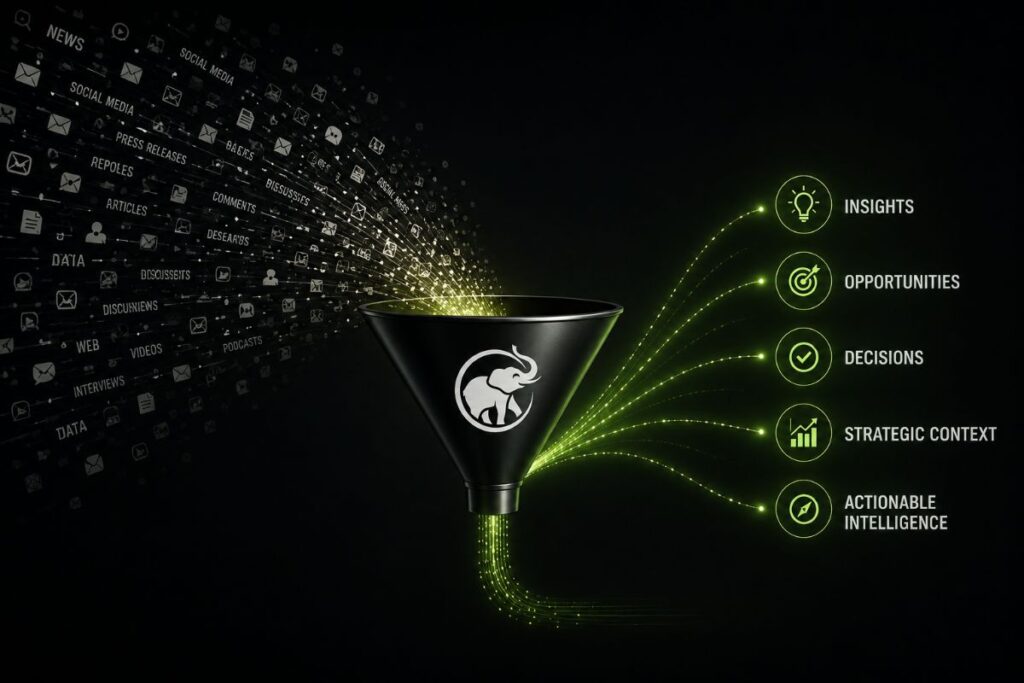
To relefy something means taking everything that could apply, and reducing it to what actually does, for one specific person, at the moment they need it. Not summarizing. Not generating. Selecting, with intent, from noise that never stops arriving.
That act is what Relefy is built to do. Not a media company, not a writing tool, an operating layer underneath everything else. Relefy Content turns conversations, news, and research into thought leadership actually worth someone’s attention. Relefy GTM continuously adjusts go-to-market strategy against live market signals instead of a plan frozen in January. Relefy Signals surfaces relevant events, discussions, and opportunities from public information before a competitor notices them. Relefy Research reduces large volumes of information into strategic insight someone can act on the same day they get it. Different applications. Same infrastructure of relevance underneath all of them.
The companies that win won’t be the ones creating the most content. They’ll be the ones continuously turning unlimited information into relevant decisions. That’s what it means to relefy something.
Relefy isn’t a media company. It isn’t an AI writer. It isn’t another search engine. It’s the Relevance Operating System behind better content, better go-to-market strategies, better market intelligence, and better business decisions.
Because information was never scarce. Relevance always has been.
Sources
Pangram Labs LinkedIn AI-content scan, via Andy Stalman: https://andystalman.com/en/on-linkedin-ai-produces-content-but-personal-branding-builds-trust/
Zero to Something, “Artificial Authenticity: Why Founders Can’t Fake It With AI”: https://0tosomething.substack.com/p/artificial-authenticity-why-founders