78% of organizations reported using AI in 2024. Only 4% see strong returns.
That gap is not a technology problem. It is not a budget problem. It is not even an implementation problem in the technical sense. It is a thinking problem — a fundamental misread of what AI actually is and what it requires from the people deploying it.
The question worth asking is not why AI isn’t working. The question is what most organizations actually did when they said they adopted it.
What adoption looks like in practice
When a company says it uses AI, the most common version of that statement means something like this: someone bought a tool, rolled it out to a team, and measured whether people were faster at the tasks they were already doing.
The BCG research is precise about this. Nordic companies — among the best-resourced, best-educated, most digitally prepared organizations in the world — are investing heavily in AI. The majority of that investment is going toward off-the-shelf tools targeting incremental productivity gains. The returns reflect exactly that. Not because the tools don’t work. Because incremental productivity gains on existing processes is a low-ceiling bet.
You are not transforming how decisions get made. You are making the same decisions slightly faster.
That is not the same thing.
The number that should bother everyone
In a single year, strategic preparedness among Nordic organizations dropped from 61% to 43%. Tool adoption went up. Strategic preparedness went down. Those two things moved in opposite directions simultaneously.
This is not a coincidence. It is the predictable result of treating AI as a software purchase rather than a strategic reorientation. When the focus is on deployment — getting the tools in place, getting people using them — the harder question gets deferred. The harder question is: what are we actually trying to change about how this organization works?
Most organizations never answer that question. They skip straight to the tools.
The problem with the productivity frame
Framing AI as a productivity tool is not wrong. It is incomplete. And incomplete frames produce incomplete results.
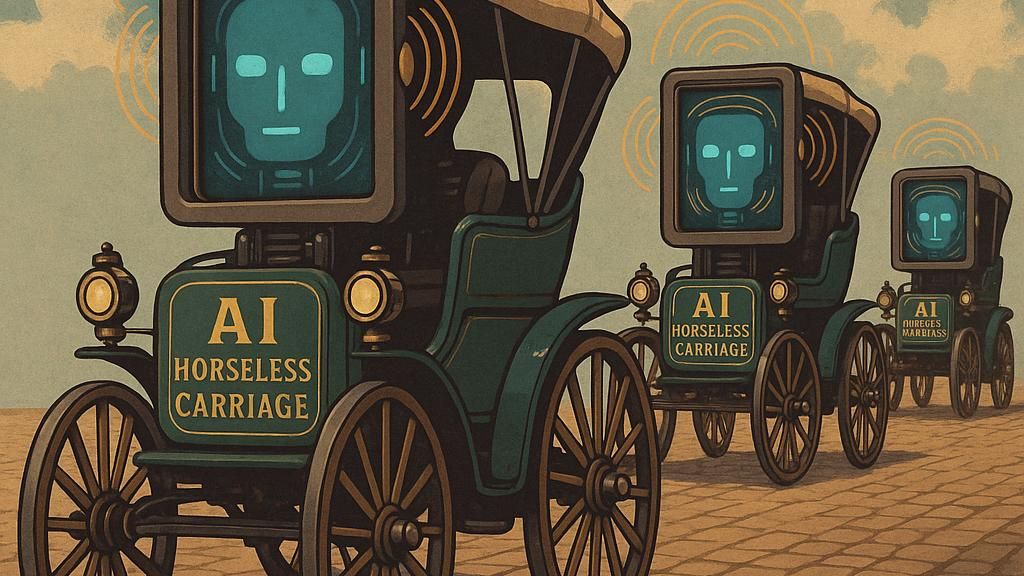
A productivity tool makes an existing process more efficient. That has real value. But it leaves the process itself untouched. The decisions being made, the logic behind them, the assumptions baked into how work gets structured — none of that changes. You get more output from the same input. The ceiling is determined by the process you started with.
Transformation is a different question. It asks: if this capability exists, what becomes possible that wasn’t before? Not how do we do what we already do faster, but what could we now do that we couldn’t justify doing before the cost collapsed?
The Stanford AI Index makes the scale of that cost collapse visible. Running AI at GPT-3.5 performance levels is 280 times cheaper than it was two years ago. Hardware costs are falling 30% annually. The capability that required enterprise-level resources in 2022 is now accessible to a small team with a modest budget.
When the cost of a capability falls 280-fold, the question is not whether you can afford to use it. The question is whether you are willing to rethink what you build around it.
Most organizations are not asking that question. They are asking how to integrate the new tool into the existing workflow. That is a much smaller question.
What the gap between 78% and 4% actually tells you
The 74% of organizations that adopted AI and saw no significant return are not failures. They are a measurement. They tell you precisely what happens when you treat a transformative capability as a productivity upgrade.
They bought the tool. They trained the team. They measured the output. The output improved modestly. The business did not change in any meaningful way. The investment returned less than expected. The conclusion drawn was that AI is overhyped, or that implementation was harder than anticipated, or that the timing wasn’t right.
The actual conclusion should be different. The tool was not the problem. The frame was.
Australia’s financial regulator named the stakes in unusually direct terms. The risk is not falling behind on technology adoption. The risk is a lost generation — citizens stuck with a lower standard of living because institutions moved from awareness to implementation too slowly. The warning was not about capability. It was about the speed of the decision to actually change something.
The 4% are asking a different question
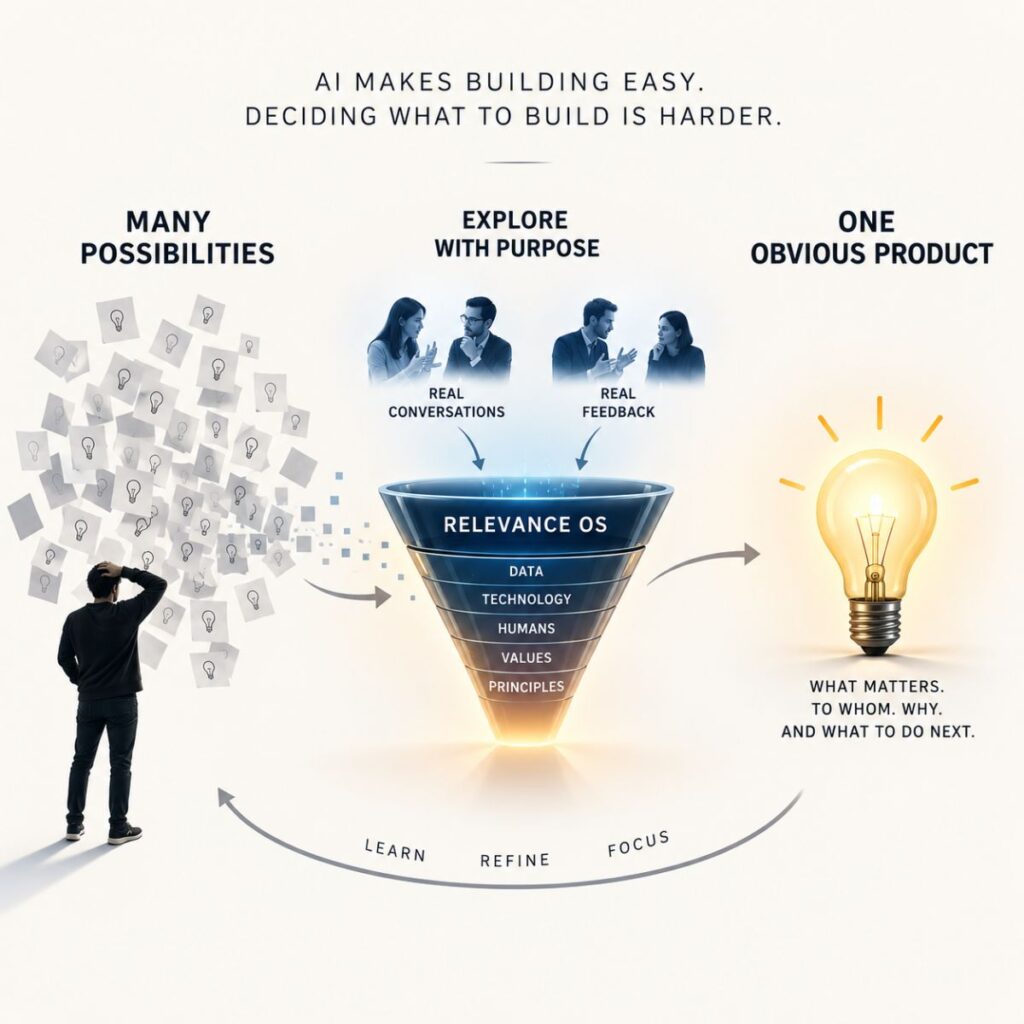
The organizations seeing strong AI returns are not the ones with the biggest budgets or the most sophisticated technical teams. They are the ones that started with the strategic question rather than the tool question.
What are we trying to change? What decision, currently made with incomplete information or excessive friction, could be made differently if we had this capability? What process, currently structured around human limitations, no longer needs to be structured that way?
Those questions lead to end-to-end initiatives rather than bolt-on tools. They lead to redesigning workflows rather than accelerating them. They lead to returns that compound rather than plateau.
The BCG finding is direct: closing the gap requires shifting from productivity tools to transformative, end-to-end initiatives. That shift is not primarily technical. It is a choice about what question you are trying to answer.
What this means for builders
If you are building a company, the adoption question is actually simpler than it looks for large organizations. You do not have existing processes to protect. You do not have legacy workflows to integrate around. You are not managing the political complexity of telling a team that the way they have been working is being replaced.
You are starting from a blank page, at a moment when the cost of intelligence has collapsed to near zero, and the gap between organizations asking the right question and those that are not is measurable and growing.
The question is not whether to use AI. The question is whether you are using it to do what you already planned to do slightly faster, or whether you are letting it change what you build in the first place.
Those are not the same bet. And right now, 96% of the market is making the smaller one.
What are you actually trying to change?